Ingredient deep dive
Kawakawa: the native plant modern science is studying
Kawakawa is a taonga plant of Aotearoa. Here is what it is, how it has been used, and what early human research is finding.
Fiona Nagy28 December 2025 · 3 min read · 3 references
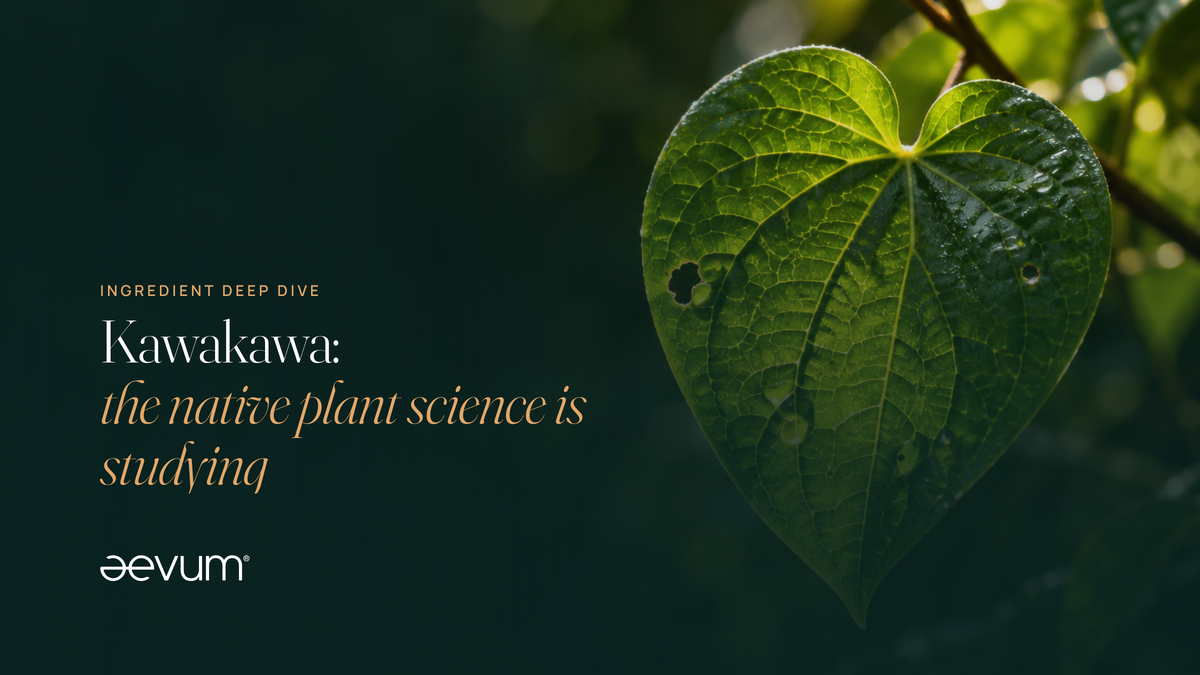
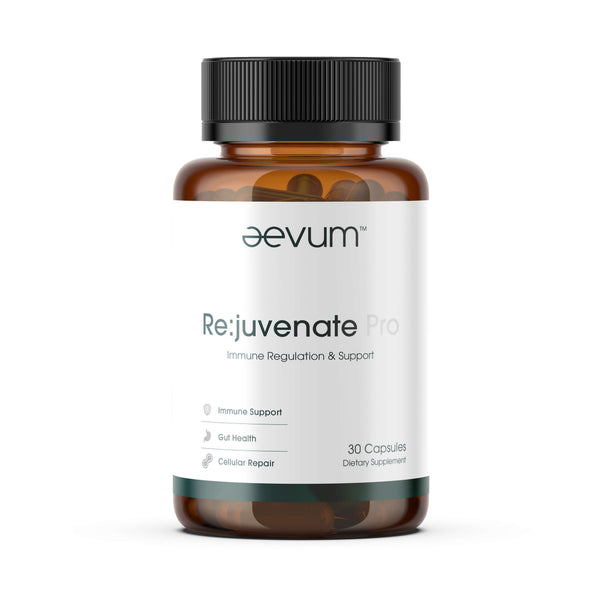
Kawakawa is one of Aotearoa New Zealand's most recognisable native plants, its heart-shaped leaves a familiar sight along forest tracks and coastlines. Treasured in rongoā Māori for generations, it is also one of the four bioactives in Re:juvenate Pro.
Key takeaways
- Kawakawa (Piper excelsum) is a native herb with a long history of traditional use.
- University of Auckland researchers have profiled 64 compounds in the leaf and run two small human studies of kawakawa tea.
- The findings are interesting but early, and longer trials using capsules are under way.
- Each Re:juvenate Pro capsule contains 100 mg of kawakawa.
What is kawakawa?
Kawakawa is a native herb found throughout Aotearoa, recognised by its glossy, heart-shaped leaves and warm, peppery scent. It is rich in polyphenols, the plant compounds that give many leaves and berries their protective qualities. For generations it has been brewed as a tea or used as a soothing balm.
A taonga in rongoā Māori
Kawakawa holds a treasured place in rongoā Māori, the traditional Māori system of healing. It was valued as a versatile plant, used to support digestion and comfort. That heritage is something we honour rather than claim. Much of the modern scientific interest in kawakawa began because of how highly it has long been valued.
We didn't add kawakawa as a nod to heritage. It earns its place in the formula.
What the research is finding
Inside the leaf
University of Auckland researchers identified 64 compounds across eight leaf sources and measured eight of them, including myristicin and vitexin. In cell studies, compounds found in the leaf show anti-inflammatory activity.
Two small human studies
In two randomised crossover studies in healthy adults, a cup of kawakawa tea before a high-carbohydrate meal was followed by a lower insulin response an hour later. A follow-up analysis found lower activity of some inflammation-related genes in blood cells over the following two hours.
What comes next
The human studies used 4 g of dried leaf as tea, so they are research on the plant, not on our capsule dose. Longer trials using kawakawa capsules are registered or under way.
Why quality matters
Kawakawa's compound profile varies with how the plant is grown, harvested and processed. We use a standardised kawakawa extract, tested batch by batch, so every capsule is consistent.
References
- Ramzan F, Jayaprakash R, Pook C, et al. Acute effects of kawakawa (Piper excelsum) intake on postprandial glycemic and insulinaemic response in a healthy population. Nutrients. 2022;14(8):1638. View source
- Tautuiaki S, Gojer J, Jayaprakash R, et al. Anti-inflammatory effects of kawakawa (Piper excelsum): an integrative mRNA–miRNA approach. Food Sci Nutr. 2024;12(11):8858–8869. View source
- Jayaprakash R, Ramzan F, Miles-Chan JL, Foster M, Mithen RF, Pook C. Exploring the chemical space of kawakawa leaf (Piper excelsum). Nutrients. 2022;14(23):5168. View source