Thought leadership
Controlling immune senescence: the quiet key to healthspan
Why immune ageing may sit underneath so much of how we age, what the newest research can now measure, and what the evidence honestly supports.
Lisa Tamati · Co-founder, Aevum Labs16 November 2026 · 7 min read · 8 references
In this essay
7 min · 1461 wordsFor most of my life I measured ageing in kilometres. How far could I still run, how fast could I recover, how much could I ask of my body before it asked something back. It took me years, and a lot of time with researchers on my podcast, to see that the most important changes weren't happening in my legs at all. They were happening in my immune system.
Scientists call it immune senescence: the slow, universal change in how the immune system works as we get older. I've come to believe it's one of the most useful ideas in longevity science, and one of the least talked about. This essay is my attempt to explain why, and to be honest about what we can and can't do about it.
Lifespan grew. Healthspan didn't keep up.
Modern medicine has been remarkably good at adding years to life. It has been less good at adding life to those years. Healthspan, the stretch of life we spend well, independent and able to do the things we love, hasn't kept pace with lifespan.
When I ask people what they actually want from longevity, almost nobody says "more years". They say they want to keep up with their grandkids, to stay sharp, to stay out of hospital. They want more good years. That is a question about healthspan, and healthspan keeps leading researchers back to the immune system.
What ageing does to the immune system
The immune system touches almost every tissue in the body. It defends us, but it also repairs, clears and keeps the peace. As we age, it changes in a few predictable ways.
The thymus, a small gland behind the breastbone where many immune cells are trained, is at its most active in childhood and gradually shrinks from our teenage years. With fewer new cells coming through, the body leans more on cells that remember old challenges and has fewer ready for new ones. The system can become slower to respond, and slower to settle afterwards. And many of us develop a low, ongoing hum of immune activity even when we feel perfectly well.
None of this is a disease. It happens to everyone. But it changes how I think about ageing: not as a list of separate problems that arrive one by one, but as something with a shared foundation underneath.
Measuring immune age
For a long time, immune ageing was something you could describe but not measure. That has started to change. Researchers at Stanford University studied blood samples from around a thousand people in the 1000 Immunomes Project, and used machine learning to build an inflammatory clock they call iAge. It estimates how old someone's immune system looks, compared with their age in years.
What struck me about that work is how much it simplified. Out of dozens of possible signals, a few carried much of the information. That gives researchers something concrete to study: not "ageing" in the abstract, but specific signals that can be measured, tracked and, perhaps one day, nudged.
If we can measure how the immune system is ageing, we can finally start to ask what keeps it on track.
These tests aren't part of routine care yet, and I'd be wary of anyone who sells them as a diagnosis. But I find the direction of the research genuinely hopeful.
Why I start with the gut
Around 70% of the body's immune tissue sits in and around the gut. The gut lining is a barrier between what we eat and the rest of the body, and the immune cells along it are constantly deciding what to tolerate and what to respond to. It is, in a very real sense, where the immune system does much of its daily work.
So when people ask me where to begin, I start there. Look after the gut and you are looking after a large part of the immune system at the same time.
What the evidence supports, and what it doesn't
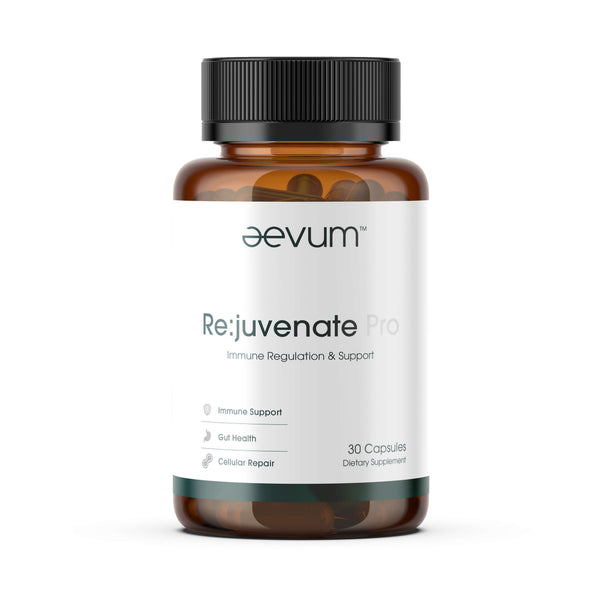
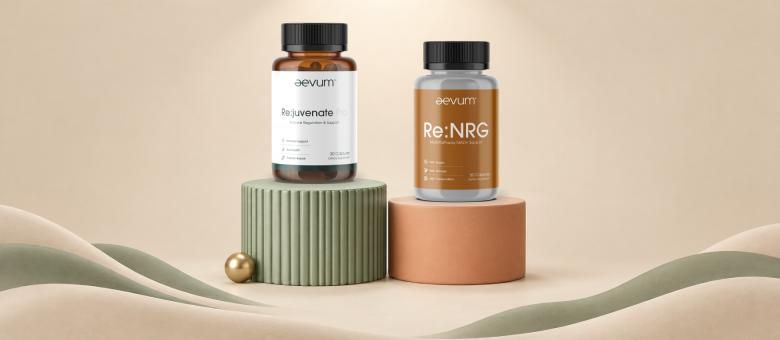
This is the part I care about most. The supplement world is full of big promises and thin evidence, and I didn't want Aevum to add to it. When we built Re:juvenate Pro, we chose four bioactives to support healthy immune function and gut health as we age, and we committed to describing the research on each one exactly as it is.
IDP®, a protein complex from New Zealand dairy, has been tested in two randomised, placebo-controlled trials. In 53 adults aged 25 to 65, 200 mg a day meant more people had a four-fold rise in antibodies after a flu vaccination: 62% compared with 24% on placebo. In 319 children aged three to seven, 200 mg a day over a 16-week winter meant fewer and shorter colds than placebo.
Immunel®, a concentrated colostrum extract, was tested in a small randomised, placebo-controlled study in healthy adults. A single 150 mg dose increased the activity of phagocytes, the immune cells that engulf microbes, within two hours. It's early research, and we describe it that way.
Rosemary extract provides about 70 mg of carnosic acid per capsule. In laboratory studies using human cells, carnosic acid lowered the signal that contributes most to the iAge clock. That is a lab finding, not a human trial, but it is why rosemary is in the formula.
Kawakawa is a taonga plant of Aotearoa with centuries of traditional use. University of Auckland researchers have run two small human studies of kawakawa tea and profiled the compounds in the leaf. The findings are interesting but early, and longer trials using capsules are under way.
Three capsules provide the IDP® (200 mg) and Immunel® (150 mg) amounts used in the human studies above. Every batch is made in New Zealand under GMP and independently tested.
Where I'd begin
If you take one thing from this essay, let it be that immune health isn't something to think about only in winter. It's the ground everything else stands on.
- Protect your sleep. It's when a lot of immune housekeeping happens.
- Move every day, and lift something heavy a few times a week.
- Eat a wide variety of plants, with enough protein.
- Look after your gut, and be curious about what helps it.
- Stay connected to people. Loneliness is hard on the whole body.
None of it is glamorous. All of it adds up. And if you have a health condition or take medication, talk to your health professional before adding any supplement.
References & further reading
- Sayed N, Huang Y, Nguyen K, et al. An inflammatory aging clock (iAge) based on deep learning tracks multimorbidity, immunosenescence, frailty and cardiovascular aging. Nat Aging. 2021;1:598–615.
- López-Otín C, Blasco MA, Partridge L, Serrano M, Kroemer G. Hallmarks of aging: an expanding universe. Cell. 2023;186(2):243–278. View source
- Vighi G, Marcucci F, Sensi L, Di Cara G, Frati F. Allergy and the gastrointestinal system. Clin Exp Immunol. 2008;153(Suppl 1):3–6.
- Page R, Wei Y, Gammon C, et al. Impact of IDP® on enhancing immune response to the influenza vaccine: a double-blind, randomized, placebo-controlled pilot study. J Immunol Infect Dis. 2024;11(1):102.
- Wang Y, Tang A, Shen L, et al. Efficacy and safety of cationic whey protein fraction in preventing common colds in children aged 3–7 years. Funct Foods Health Dis. 2026;16(11):982–994. View source
- Jensen GS, Patel D, Benson KF. A novel extract from bovine colostrum whey supports innate immune functions. II. Rapid changes in cellular immune function in humans. Prev Med. 2012;54(Suppl):S124–S129.
- Hosokawa I, Hosokawa Y, Ozaki K, Matsuo T. Carnosic acid inhibits CXCR3 ligands production in IL-27-stimulated human oral epithelial cells. Inflammation. 2019;42(4):1311–1316. View source
- Ramzan F, Jayaprakash R, Pook C, et al. Acute effects of kawakawa (Piper excelsum) intake on postprandial glycemic and insulinaemic response in a healthy population. Nutrients. 2022;14(8):1638. View source